Showing posts with label Area management. Show all posts

Sunday, 30 July 2017

Hanamikoji


Today I'm going to looking at a game that I've been having a lot of fun with over the last couple of weeks, Hanamikoji.

Hanamikoji is a two player game in which both players try to win the favours of various Geisha's - entertainers, artists, dancers etc - and they do this by providing each Geisha with their performance items.

There are seven Geisha's each with their own unique performance item, ranging from a flute to a flowery hairpiece, your objective is to provide them with a majority number of their items to win their favour.

Each Geisha comes with a number shown on their card; there are three Geisha's with a number 2, two with the number 3, one with the number 4 and lastly one with the number 5. The number on the Geisha cards denote two things, firstly: the amount of cards showing that Geisha's item that are in the deck, for instance a Geisha with the number 2 on it only has two of the corresponding items necessary to win her favour in the deck, whereas the Geisha with the number 5 on the card has five copies of her necessary item in the deck.
Secondly, the numbers on the Geisha card represents how many points you gain for winning her favour.

Set up

First, place all the Geisha cards in the centre of the table between both players ranging from 2 to 5, as shown above, it doesn't matter what order you put the three Geisha's with the number 2 on them as long as they are the first three in line and the same for the two with the number 3 on them.
Then place one of the seven victory markers on each Geisha to represent that they are neutral and haven't been won over by either player. Shuffle the deck of twenty one item cards and remove one face down, then deal seven cards to each player.

Finally, take the action tiles - there should be four pairs of two - and give each player one for each of those pairs.

Gameplay

Each turn, players must use one of their action tiles to try and provide the Geisha's with their corresponding item in order to gain favour.


Action Tile 1 - Take one card from your hand and remove it from the game face down. At the end of the round, take that face down card and place it in front of the corresponding Geisha. This tile is very useful if you are worried that your opponent will get the majority on a Geisha, you can use it almost as a late game trick to possibly tie for a Geisha or maybe even win the majority.

Action Tile 2 - When you use this action tile, you take two cards from your hand and remove them from the game. Unlike the first action tile, you don't get to put them in front of a Geisha at the end of the round, these cards a removes until the start of the next round. This tile is useful if you know you have the majority of items for a Geisha and don't want your opponent getting their hands on them, so you can get rid of them guaranteeing the victory point of one Geisha.

Action Tile 3 - Using this tile requires you to take three cards from your hand and reveal them to your opponent. Your opponent then chooses one of those three cards and puts it in front of the corresponding Geisha and you get the other two cards and do the same. Using this tile early can give you a good idea of what your opponent might have lurking in their hand and it could create a tough decision for them as they only get one of the three cards.

Action Tile 4 - For the last action tile you must take four cards of your choice from your hand, split them up into two piles of two cards each - the split is completely up to you - then your opponent gets the choice of one pile and puts those cards in front of the corresponding Geisha and you get the remaining pile and do the same. The beauty of this tile is giving your opponent an option between a duo of cards that looks good for them but leaving a great set for yourself, possibly resulting in winning the majority for a Geisha.

The object of the game is to gain the favour of four Geisha's over a number of rounds, keeping the victory point of each as long as your opponent never gains the majority, or scoring eleven points. Points are scored equal to the Geisha you have a majority and therefor have gained the victory point of, for example; if a player wins the majority of the Geisha's with four and five in the corners, that player has scored 9 points, players keep track of their points scored from round to round to make sure the game has an ending point. If at any point both scoring eleven points and gaining the favour of four Geisha's would happen, the four Geisha's takes priority as it's harder to achieve.

Thoughts

Hanamikoji as a whole is a very interesting game that promotes forethought and strategy. It has a lot of replay-ability and has a lot of charm and enjoyment when it comes to the design; compact, colourful and the right amount of challenging that doesn't always punish you for making errors. It's a very easy game to grasp and hard to master and will always vary from player to player as to what cards they want to use with what tiles, but overall I think players will have a lot of fun with this little two player game and get a lot of use out of it.

Hopefully this look at Hanamikoji has inspired you to try it for yourself, in which case head down to your local games and hobbies store and they will be more than happy to demo it for you. Until then however, keep checking back to Game Changers for more gaming news and updates.

Wednesday, 26 July 2017

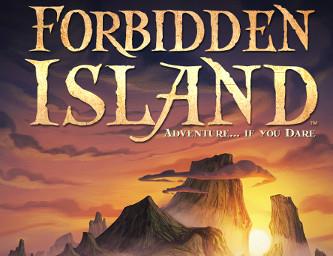
Forbidden Island


Forbidden Island is a cooperative treasure recovery game brought to you by publishers Gamewright.

In Forbidden Island, 2-4 players take on different roles to try and retrieve hidden treasures that had been stowed away on an island before the island becomes submerged and you drown.

Set Up

First of all, you need to set up the 24 tiles you have in a random order like so: 2 tiles at the top, beneath them you place 4 tiles, then 6, then another 6, then 4 and finally 2 in a diamond arrangement. These tiles represent the island that you and your friends are on.


Take the Flood metre and set it to what difficulty you would like to play; novice, normal, extreme or legendary. This denotes how many cards from the top of the flood deck will be flipped over at the end of the turn.

Next, shuffle and place the orange or Treasure deck and the blue or Flood deck next to the Island tiles. The Treasure deck contains cards showing a picture of the four different treasures on the island; there are five copies of each card for each treasure. It also contains Helicopter cards, Sand bag card and Water Rising cards (three Waters Rise, three Helicopter Lift and two Sandbag) which I'll get to later. Each player is dealt two cards from the Treasure deck and then the top six cards of the Flood deck are flipped over to show which tiles start submerged.
The Sandbag card allows that player to shore up a tile anywhere on the island at any time.

The Helicopter lift allows that player to move any player to any tile on the island. This card is also necessary to win the game by getting you off the island.

The Water Rise card means that the flooding is gonna get worse. When a player draws a Water Rise card it's immediately discarded and you put the Flood Metre up one notch, along with taking all the flipped cards from the Flood deck, shuffling them and placing them on top of the Flood Deck. Lastly you flip the number of Flood cards from the top of the deck equal to the number on the Flood Metre, possibly resulting in sinking a tile and removing it from the game.

Each player then picks a role, each role having an ability that could help your team of explorers;

Navigator: The Navigator's ability is that they can move another player two adjacent tiles for just one action.

Messenger: The Messenger is able to give any other player on the island a Treasure card, in exchange for one of their actions for the turn, no matter where they are, so you don't have to be on the same tile.

Pilot: Once per turn as one of their actions, the Pilot can fly to any tile on the island, very useful for gathering Treasures.

Engineer: The Engineer can use their ability to shore up to two tiles up as their action. You do have to be able to shore them both up so you can't choose one in front of you and then one diagonally or on the other side of the island.

Diver: The Diver is able to move one or more spaces through a flooded or missing tile but must end up on a shored tile at the end.

Explorer: The Explorer is able to move  and/or shore up diagonally as their actions for the turn.

and takes the matching coloured playing piece. Players then place their coloured playing piece on the corresponding starting tile which will be represented by having the coloured playing piece in the bottom corner.

Gameplay

Each player has three actions in his or her turn and they can choose from a selection of four;

Moving: Each movement counts as one action. You can't move diagonally

Shoring up: If a tile has started to sink, it's flipped and showing the greyed out side, you can choose to use one of your actions to shore it up. You do so by flipping it back to its coloured side.

Give a Treasure card: You can choose to give a Treasure card to one of your team mates, maybe if they have more of one Treasure or are closer to the tile your need to get it, in which case you can make one of your actions giving them a treasure card from your hand. You must be on the same tile to do this

Acquire a Treasure: If you find yourself with four of the same Treasure card and on the corresponding tile to acquire it, you can do just that by discarding all four of the Treasure cards and taking the Treasure.

At the end of that players turn, they draw two cards from the Treasure Deck and the top two cards from the Flood Deck are flipped over revealing which tiles will start sinking. Players can only have a maximum of five cards in their hand so if you draw above five you must discard the difference. If a player is on a tile that needs to be flipped over, that player must swim to a adjacent tile, if they can't, the drown.

You win the game by gathering all the Treasures, all players getting to Fools Landing and using a Helicopter Lift cards to escape. Beware, you lose the game if;

- Both tiles with a matching unclaimed Treasure sink.

- Fools landing sinks.
 
- Or a player drowns.

Thoughts

I love this game, it's easy to set up, easy to learn/teach and it's a beautiful game. Yes, it's not as challenging as other games but it's good for all ages and if you need a challenge, try bumping the starting water level higher. Ultimately I think most players will enjoy Forbidden Island even if it's just it's charm and art style and I would definitely recommend it even just on re-playability.


If you want to try Forbidden Island for yourself, head down to your local games and hobbies store and I'm sure they'll be happy to oblige. In the mean time, keep checking back to Game Changers for more gaming news and updates.

Tuesday, 11 July 2017

Carcassonne


Carcassonne is a tile based board game made now by Zman Games but in the past was published by Rio Grande. Carcassonne is one of the best board games I have ever played and I feel it still is one of the best board games out there despite being around now for seventeen years. It won the Spiel des Jahres and the Deutscher Spiele Preis awards back in 2001 and since its release has gained many expansions.

In Carcassonne, players take turn to place tiles creating roads, castles and monasteries to then place followers on them gaining points. Other than that there isn't much more to say, but the beauty of Carcassonne is that its simple to understand and almost impossible to master.

Getting Started and game play:

Each player chooses a colour and takes all the followers of that colour, there should be eight of each.
To start with, there is one start tile placed face up in the middle of the table with 71 other tiles shuffled and placed face down. Players then take it in turn taking a tile from the face down pile and connecting it to already placed tiles; you must find a place to connect the tile you have drawn correctly for example, a road can only be attack to another road, castle piece to a castle and grassland to other grassland. If you don't think a tile can be placed, all players have to agree to this and then the tile is put back and another is drawn. This element of the game ensures that no two games of Carcassonne will ever look the same resulting in variety and constantly changing game play challenges.

When players place the tile they have drawn, they then have the option of placing a follower on that tile (followers can only be placed on the most recent tile that player laid). There are four forms of placing your followers:


Standing on a road; This means that the follower you have placed is now a thief. Once the road is complete, meaning once it has two ends, any thieves on the completed road are removed and points are scored.

Standing in a castle; These followers are knights. Once the castle that they have been placed in is complete, the knights are removed and points are scored.

Standing on a monastery; The followers placed on a monastery tile are called monks. Once a monastery has been surrounded by a 3x3 grid of tiles, the monks are removed and points are scored.

Laying down in a field or on grassland; These followers are called farmers. Once you play a farmer they don't get removed until the end of the game when points are scored.

Scoring Points:

Points score differently for different followers and the number of tiles as seen below:
(Banners are represented by a little shield on some of the tiles)
    
 Completed during play points:

Castle: 2 points per tile + 2 points per banner.
Road: 1 point per tile.
Monastery: 1 point + 1 point for each surrounding tile.
Fields: Not scored.

Game End points:

Castle: 1 point per tile + 1 point per banner.
Road: 1 point per tile.
Monastery: 1 point per tile.
Fields: 3 points for each completed castle bordering the field.
                    
If more than one coloured follower occupies a castle, the player with the most of their coloured followers occupying that castle gets the points. If players are tied for the number of followers occupying the castle, the castle is contested and the points are split.
Similarly for thieves. Most of the time there cannot be more than one thief per road, however if a player places a tile and then a thief upon it and another player places a tile that is unconnected also with a thief on it, if the two pieces road become one road it is then contested and the points split.

Thoughts:

As I said, I feel that Carcassonne is one of the best board games you will ever come across and stands up as one of the greats of all time. Its simplicity and aesthetic is very engaging and the game itself is very rewarding, being able to find the perfect place to put your tile for maximum points and even playing a longer game with your farmers to give yourself a massive points boost at the end of the game. I have played many a game of Carcassonne and still go back for more and with the many expansions, ranging from a more basic Inns and Cathedrals to Abbey and Mayor to Princess and Dragon to Under The Big Top, there is so much to keep the game fresh with each expansion adding more followers, tiles and some, like Under The Big Top, adding new elements like animal pieces and a circus tent. I can almost guarantee that you will have a lot of fun with Carcassonne and the replayability is fantastic as, like I said, no two games of it are the same, with different branching roads, vast fields for your farmers to lazily lie in or weirdly shaped castles for your knights to wonder around. I would urge lovers of board games that haven't already picked it up to go and get Carcassonne, you wont regret it.

I hope this look at Carcassonne has given you some insight into the game if you haven't had much experience with it before and maybe the need to try it out for yourself. If so head down to your local games and hobbies store and I'm sure they will be more than happy to give you a demo of the game, but until then, keep checking back to Game Changers for more gaming news and updates.